Netflix's Lupin: Is the Marie Antoinette necklace based on fact or fiction?
Advertisement
Obsessions
Netflix's Lupin: Is the Marie Antoinette necklace based on fact or fiction?
Is Lupin your electric current Netflix rampage obsession? We break downward the story of the Marie Antoinette diamond necklace that'southward a focus of Season 1.
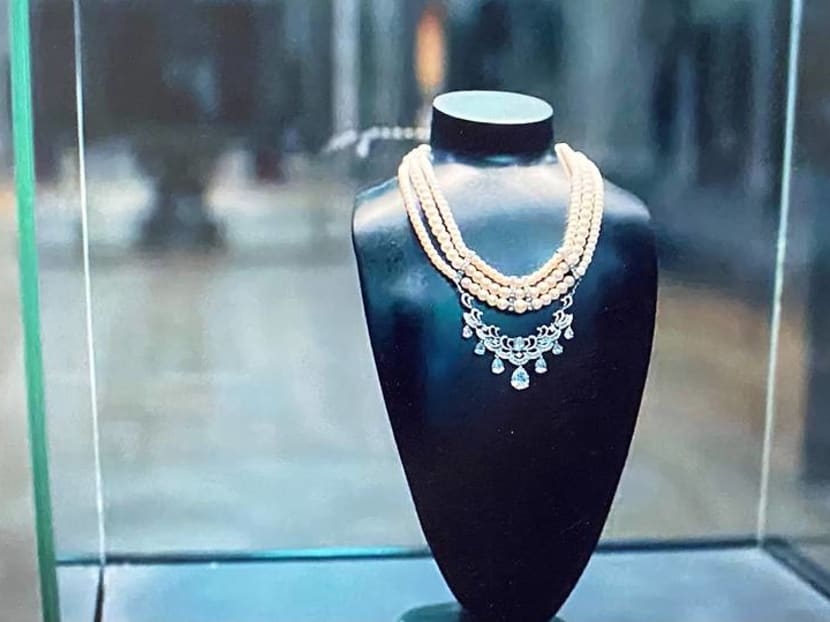
Netflix'due south French crime thriller series Lupin centres around a diamond necklace, in one case endemic by Queen Marie Antoinette of French republic. (Photo: Screenshot/Netflix)
29 January 2022 09:29AM (Updated: 04 Jul 2022 01:34PM)
In case you lot oasis't heard, Lupin is the French criminal offence thriller serial starring Omar Sy that has been smashing Netflix records since information technology premiered on Jan eight. The serial is a modern retelling of Arsene Lupin, the "Gentleman Burglar", a grapheme created by novelist Maurice Leblanc.
Lupin revolves around the story of Assane Diop (played by Sy), a man on a mission to avenge his father, who died in prison after being falsely defendant of stealing a diamond necklace from the wealthy Pellegrini family unit, that once belonged to Queen Marie Antoinette (1755-1793).
Decades later on his father's death, the necklace has been uncovered and is now up for sale at the Louvre. Assane, now a master of disguise, attempts to steal the necklace, hatching a plan to infiltrate the museum and manipulate his team of thugs in club to leave with the jewel in his pocket.
Simply how much does the Marie Antoinette necklace draw from history? Is the necklace real? We answer your called-for questions beneath, starting with…
WHO IS MARIE ANTOINETTE?
Marie Antoinette was the last queen of France earlier the French Revolution took down the monarchy. She was built-in in Austria and married heir credible to the French throne, Louis-Auguste, in 1770, at just 14 years onetime.
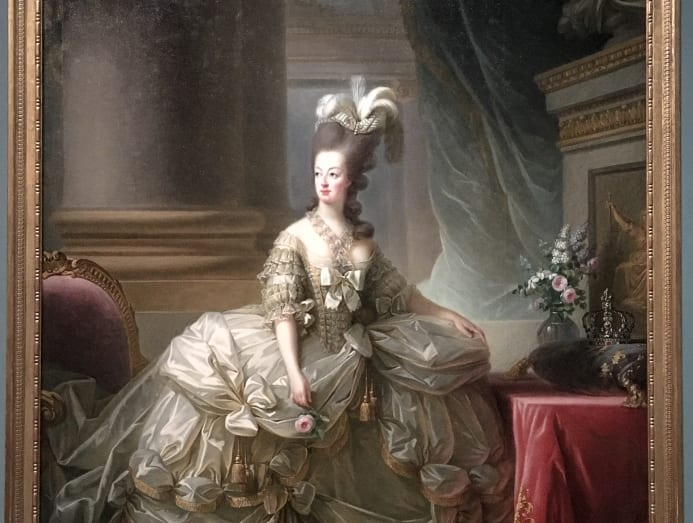
Four years later on, her hubby ascended the throne and became Rex Louis Sixteen of France, making Marie Antoinette the Queen of France. The couple had four children, only one of whom survived into adulthood.
In 1793, she lost her caput to the guillotine (more on that later on).
WHAT ABOUT HER JEWELLERY Drove?
Marie Antoinette had a reputation for excess, and her lifestyle made her the subject field of hatred amid the people during the French recession. There were rumours that she spent a fortune on decadent clothes, wigs and jewellery, including lavish diamonds and pearls.
The Queen did not go far through the French Revolution, but her jewellery did. For centuries, information technology was widely believed that all the crown jewels had been lost when Marie Antoinette and the King attempted to flee France.
In reality, the Queen had actually placed her prized jewellery in a wooden chest and passed it on to Florimond Claude, Comte de Mercy Argenteau, an Austrian diplomat and loyal servant to the queen. The collection was smuggled out of France and made information technology safely into the hands of the Austrian Emperor (Marie Antoinette'due south nephew), before being passed back to Marie-Therese, the final surviving kid of the French monarchy.
The collection remained in the possession of Marie Antoinette's heirs, unseen to the public for 200 years, until information technology resurfaced on the sale block in 2018. That year, Sotheby'due south held what it dubbed "1 of the nearly important royal jewellery collections ever to appear on the market".

The jewellery sold for millions at the auction. A large diamond-and-pearl pendant fetched over US$36 one thousand thousand (S$47.9 million), setting the world tape for a pearl sold at auction. The drove also had a monogram ring bearing the initials MA, which had a lock of the queen's hair encased.
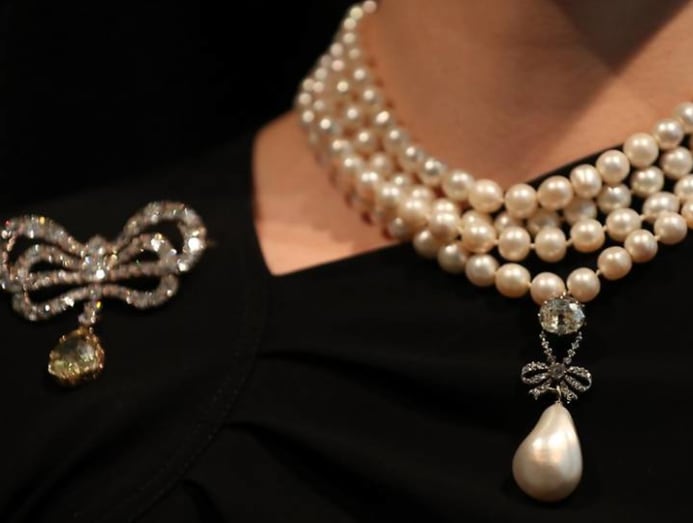
In total, ten pieces of Marie Antoinette'due south jewellery raked in over Us$xl 1000000 at the auction.
Then, IS THE LUPIN NECKLACE BASED ON FACT OR FICTION?
It's really a mix of both. There was indeed an important diamond necklace in the history of Marie Antoinette, but it was never owned by the Queen and in fact, led to her demise.
In 1772, King Louis 15 commissioned an outlandish diamond necklace from Parisian jewellers Boehmer and Bassenge as a gift to his mistress. Information technology was reportedly made out of 647 individual diamonds for a combined weight of 2,800 carats.
But before the necklace could exist completed, the King passed away. Left with a necklace with no buyer, the jewellers approached King Louis XVI years subsequently, hoping his wife, Marie Antoinette, would take a liking to it. Unfortunately, she did non, preferring instead to spend the money on battleships.
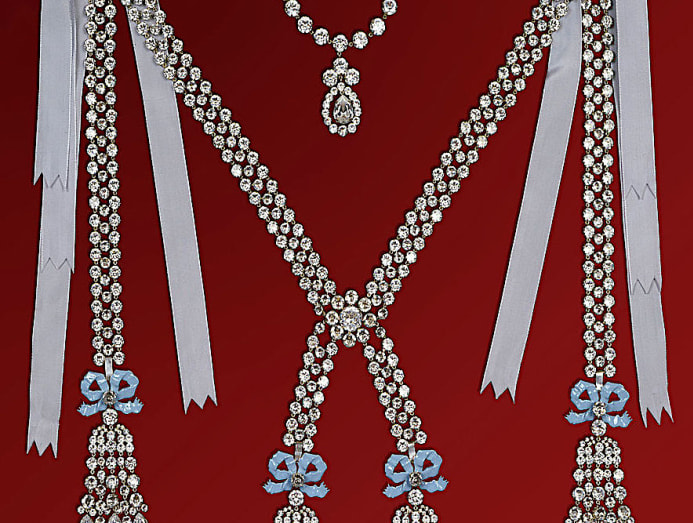
Enter Jeanne La Motte, a con artist and illegitimate descendant of Rex Henri II of France who had been slowly climbing up the majestic ranks. She made the acquaintance of the Cardinal de Rohan, a member of ane of France'southward nearly distinguished purple families. The Key aspired to be a minister in the royal courtroom, but had fallen out of favour with Marie Antoinette.
Through a series of forged messages, La Motte ends upwards tricking the Central into thinking that Marie Antoinette was interested in the necklace. Determined to proceeds the queen's favour, Rohan meets with the jewellers and agrees to pay for the necklace in instalments. He gives the necklace to La Motte to laissez passer on to the Queen. Of form, this was all part of La Motte's scam, and she takes the necklace to her hubby, who takes apart the necklace and sells off the individual stones. The jewellers were never paid.
The Key was arrested and a sensational trial followed. He was eventually declared innocent and La Motte was arrested and judged.
Although historians believe Marie Antoinette was blameless, the public believed that the Queen had been involved in the scam to cheat the jewellers and the Cardinal, whom she detested. The Queen's popularity suffered a huge pass up, and her reputation never recovered.
The necklace was said to have sparked the French Revolution and a few years later, Marie Antoinette faced the guillotine on accounts of treason, nine months after the King was executed. Her death signified the end of the French monarchy.
The necklace in Lupin is indeed based loosely on this diamond necklace, with several similarities including the fact that both had been broken upward and their gems scattered all over the earth.
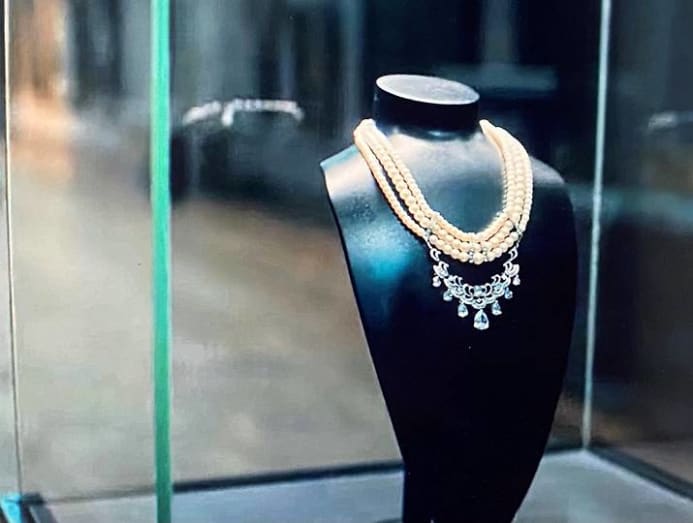
But the real diamond necklace was never recovered, nor had information technology e'er been in the hands of a wealthy family, nor ever displayed at the Louvre.
What happens to the necklace in Lupin in the stop? Well, you lot'll just have to stream the series to discover out.
READ> Stream it or skip it: Here are 10 things we hated nearly Netflix's Bling Empire
Source: https://cnalifestyle.channelnewsasia.com/obsessions/netflix-lupin-marie-antoinette-diamond-necklace-235696
Belum ada Komentar untuk "Netflix's Lupin: Is the Marie Antoinette necklace based on fact or fiction?"
Posting Komentar